 Skip to content
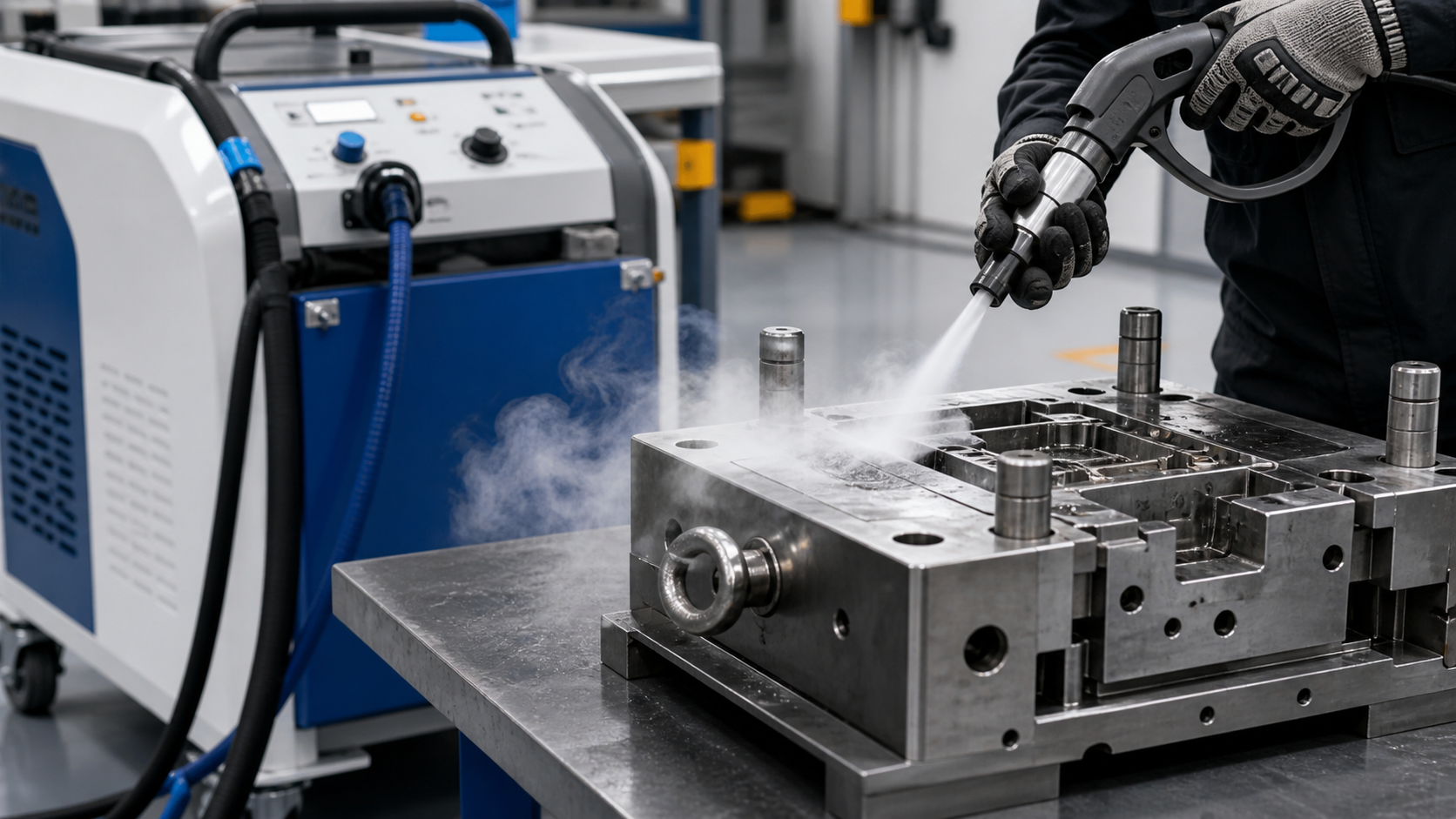
For industrial buyers, a dry ice blasting equipment quotation should not be based only on machine price. The right dry ice blaster depends on the cleaning object, contamination type, compressed air capacity, dry ice supply, working environment and expected cleaning frequency. A complete quotation request helps the supplier recommend a practical configuration and reduces back-and-forth before procurement.
This checklist is written for factories, mold cleaning teams, automotive service companies, machinery maintenance contractors, food processing plants and industrial cleaning service providers that are evaluating DRYICEJET dry ice blasting equipment.
1. Cleaning Object and Application
Start by describing what needs to be cleaned. Common dry ice blasting applications include molds, engines, production equipment, conveyors, electrical cabinets, printing machinery, welding fixtures, food processing equipment and general plant maintenance. Photos or short videos of the cleaning object are useful because they show surface shape, access space and contamination coverage.
- What object needs cleaning?
- Is the object fixed in place or removable?
- Are there narrow gaps, complex corners or delicate surfaces?
- Do you need online cleaning, offline cleaning or mobile cleaning service?
2. Contamination Type
Different residues need different nozzle choices, pressure settings and cleaning time estimates. Before asking for a quotation, identify whether the surface contains oil, grease, carbon buildup, rubber residue, release agent, paint overspray, adhesive, dust, food residue or other industrial contamination.
If your team is still comparing cleaning methods, read Dry Ice Blasting vs Sandblasting to understand when a non-abrasive, waterless method may be more suitable than abrasive blasting.
3. Material and Surface Requirements
Dry ice blasting is often selected when buyers want to reduce secondary waste and avoid abrasive media residue. However, the supplier still needs to understand the base material and surface sensitivity. For molds, precision machinery, aluminum parts, rubber surfaces or painted components, share any surface protection requirement before quotation.
4. Compressed Air Capacity
Dry ice blasting equipment works with compressed air, so the available compressor capacity is one of the most important quotation inputs. Send the compressor pressure, air flow and whether the air supply is fixed in a workshop or mounted on a mobile cleaning vehicle.
- Available air pressure
- Available air flow
- Air hose length and working distance
- Indoor or outdoor operating environment
5. Dry Ice Supply
Buyers should also confirm how dry ice will be supplied. Some companies purchase dry ice from a local supplier, while others consider on-site production for higher usage or frequent cleaning. If your project needs a complete dry ice workflow, review dry ice production equipment and dry ice storage containers together with the blasting machine.
6. Cleaning Frequency and Workload
A service company cleaning different sites every week may need a different machine configuration from a factory that cleans the same mold or production line on a fixed schedule. Before requesting a quotation, estimate daily or weekly operating hours, number of cleaning objects and whether multiple operators will use the equipment.
7. Destination Country, Voltage and Delivery Needs
For export quotations, include the destination country, required voltage, delivery address type and any preferred shipping term. This helps the supplier prepare a more complete commercial offer and avoids delays after machine selection.
8. How to Choose a DRYICEJET Machine Series
DRYICEJET offers dry ice blasting equipment for different workloads, including BM2, BM4, BM9, P9, P9 Pro and P9S series machines. The final model should be selected according to application, compressed air supply, mobility needs and cleaning intensity. For a broader selection guide, read How to Choose an Industrial Dry Ice Blasting Machine.
Quotation Information to Send DRYICEJET
- Cleaning object photos or videos
- Contamination type and thickness
- Base material and surface sensitivity
- Compressed air pressure and air flow
- Dry ice supply method
- Cleaning frequency and daily workload
- Indoor, outdoor, fixed or mobile use
- Destination country, voltage and shipping requirement
With these details, DRYICEJET can recommend a dry ice blasting equipment configuration for your cleaning project and prepare a quotation for industrial use. Visit the dry ice blasting equipment page to compare machine options and send your project information.
FAQ
What information is needed for a dry ice blasting machine quotation?
Useful information includes cleaning object photos, contamination type, base material, compressed air capacity, dry ice supply, cleaning frequency, destination country and voltage requirement.
Can one dry ice blaster clean different industrial parts?
In many cases, one machine can support different cleaning tasks with suitable nozzles and settings. The final recommendation depends on surface shape, residue type, air supply and cleaning intensity.
Should a buyer purchase dry ice or produce dry ice on site?
For occasional cleaning, buying dry ice locally may be practical. For frequent cleaning or service operations, on-site dry ice production and storage may help build a more stable cleaning workflow.
